Lummi Nation
Indigenous Public Artist / Muralist / Environmental Storyteller
Indigenous artist working at the intersection of land, culture, and community-scale public art.
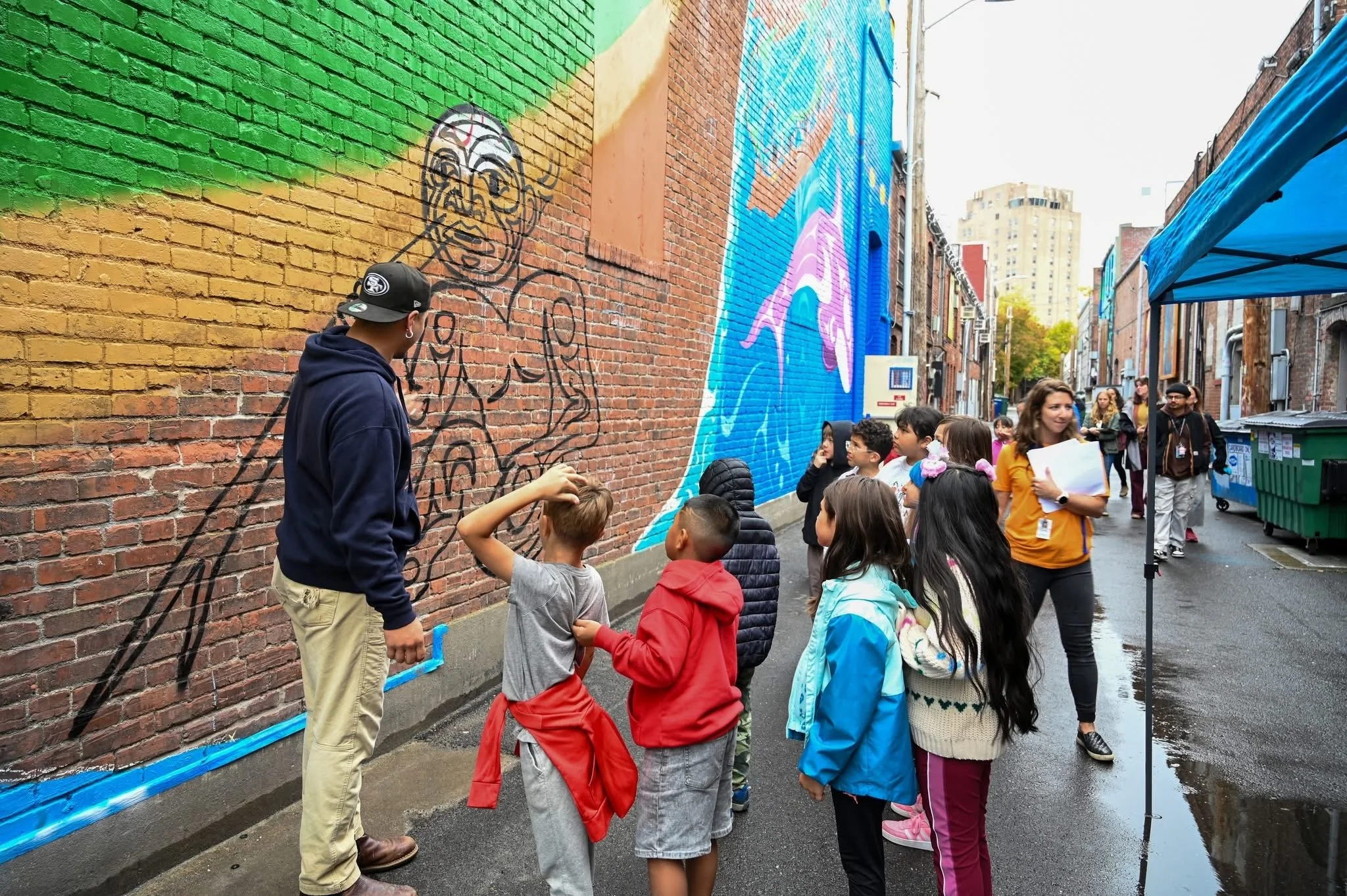
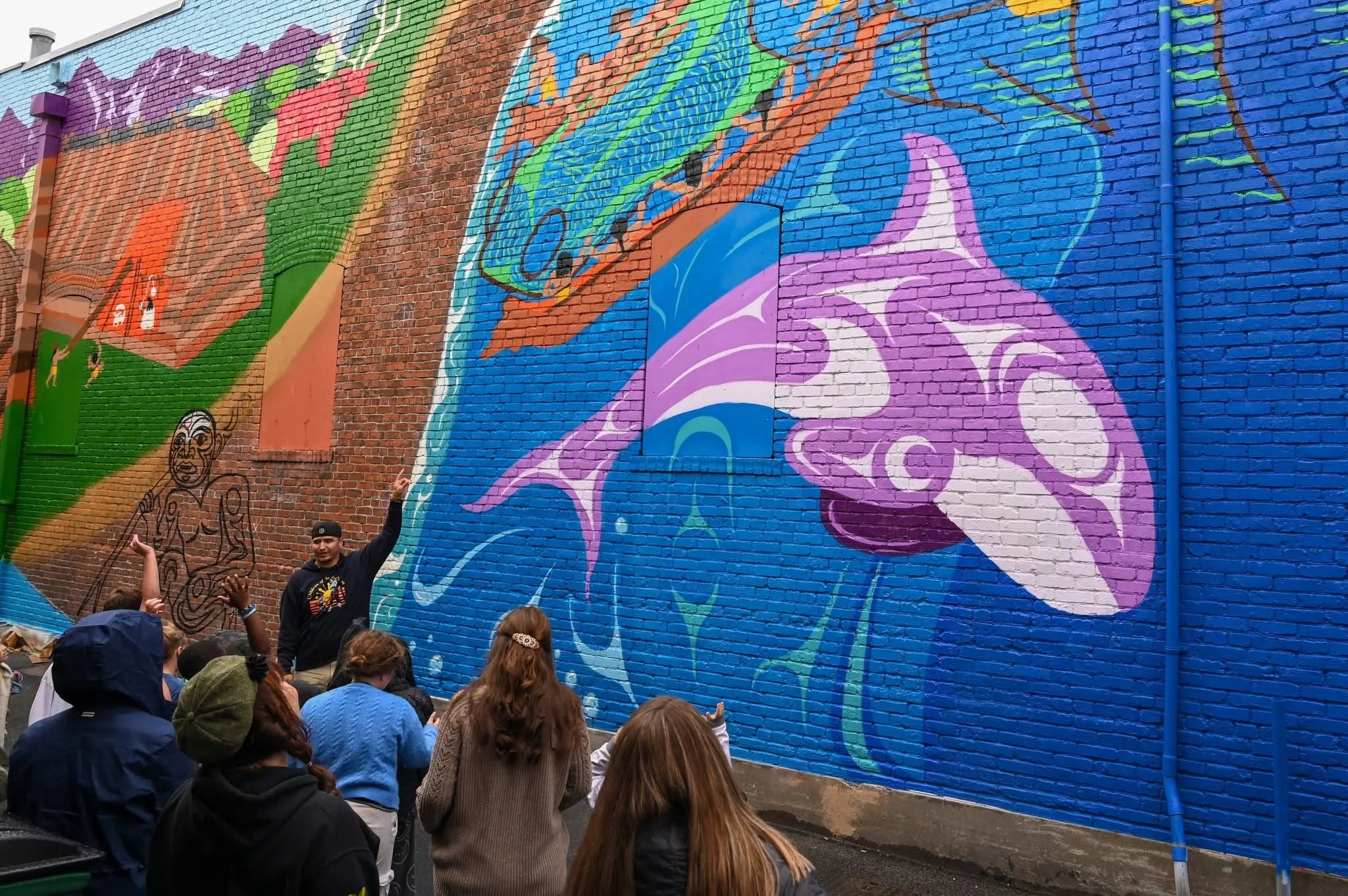
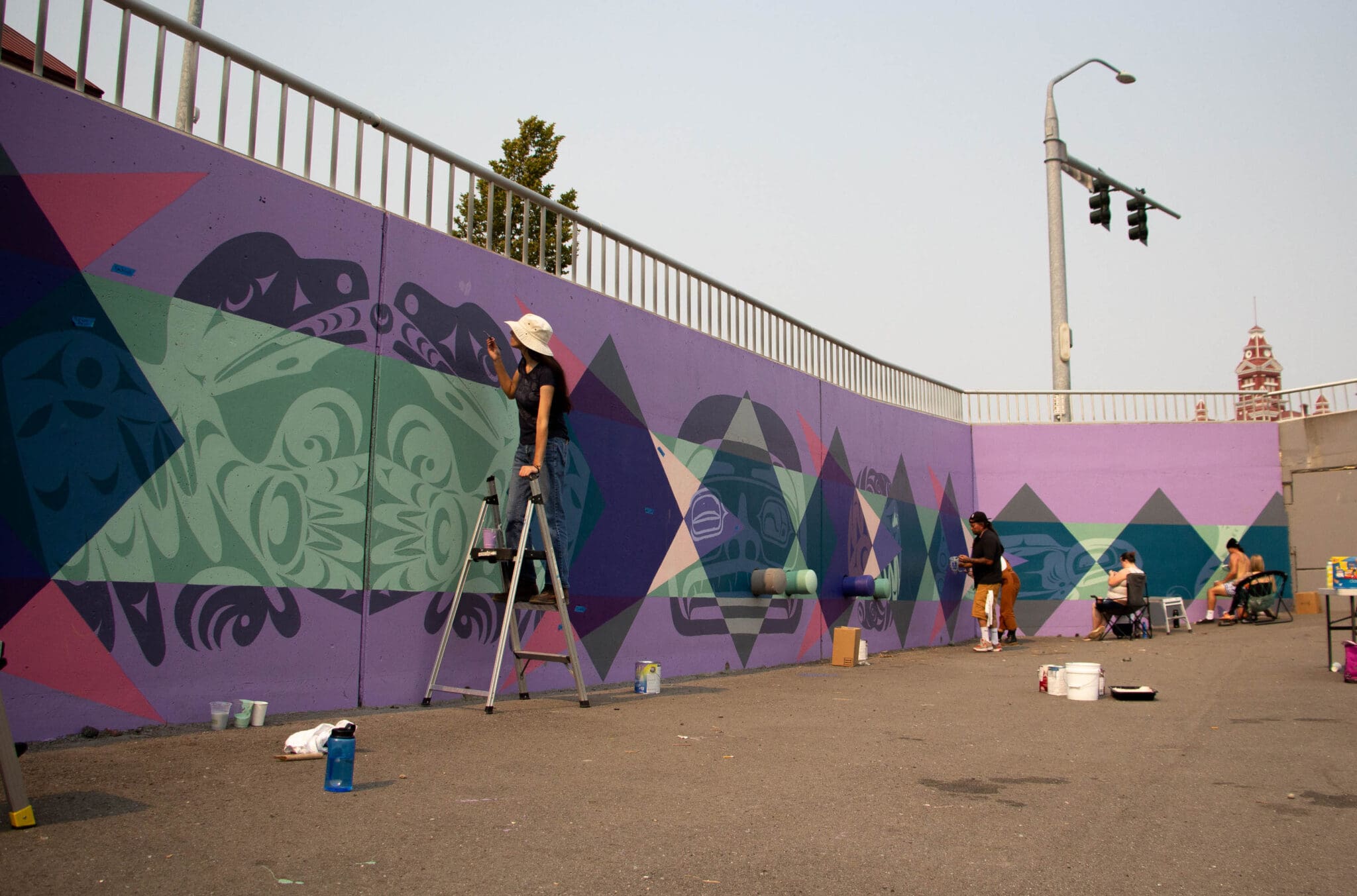
View WorkLocated in a downtown Bellingham alley near the original Lummi village site Xw'otqwem, this mural honors the stories, presence, and true history of the Coast Salish people on the land where Bellingham now stands. The work features eagle, salmon, and orca alongside traditional ecological technology including reef nets and clam gardens.
Created with the CSSP team alongside Raven Borsey and Roy Nicol, and funded by the City of Bellingham Downtown Activation and Beautification grant.
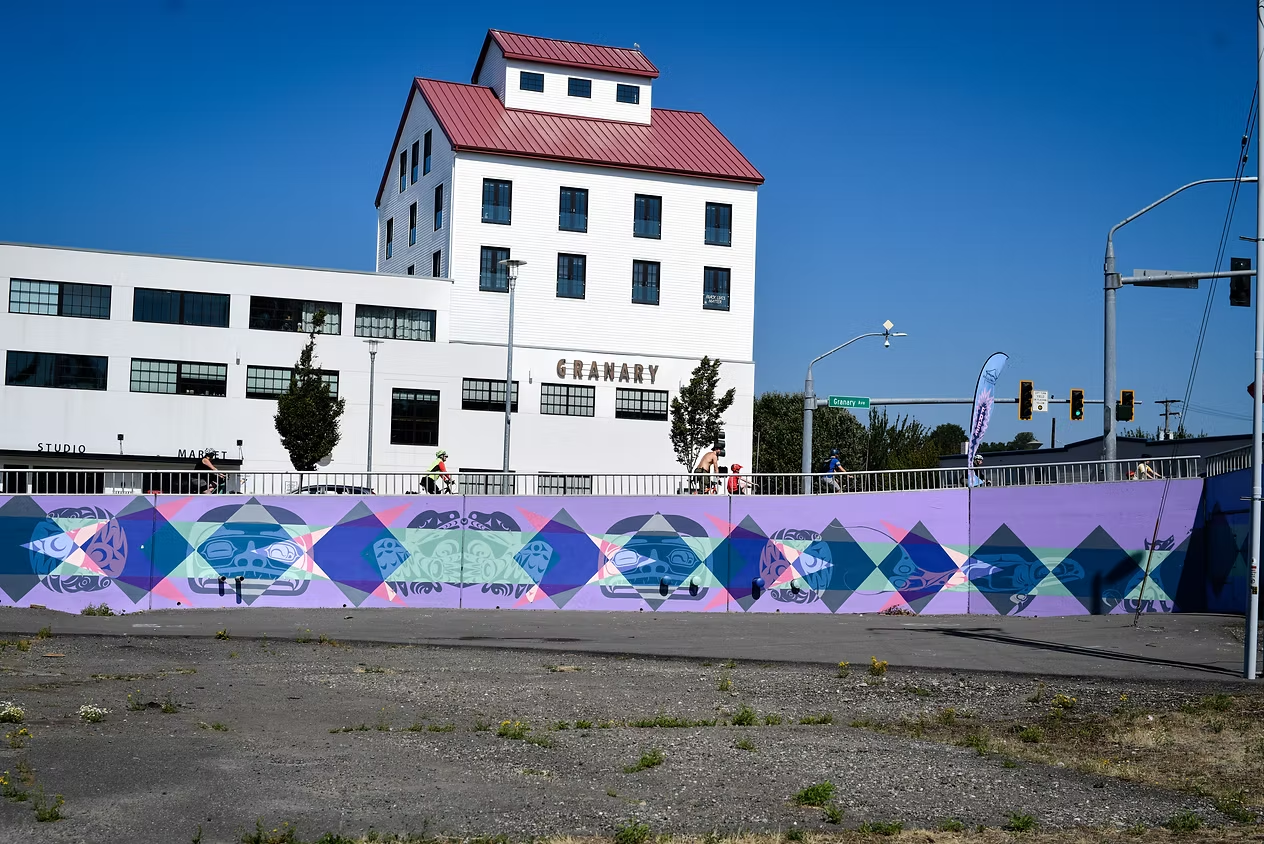
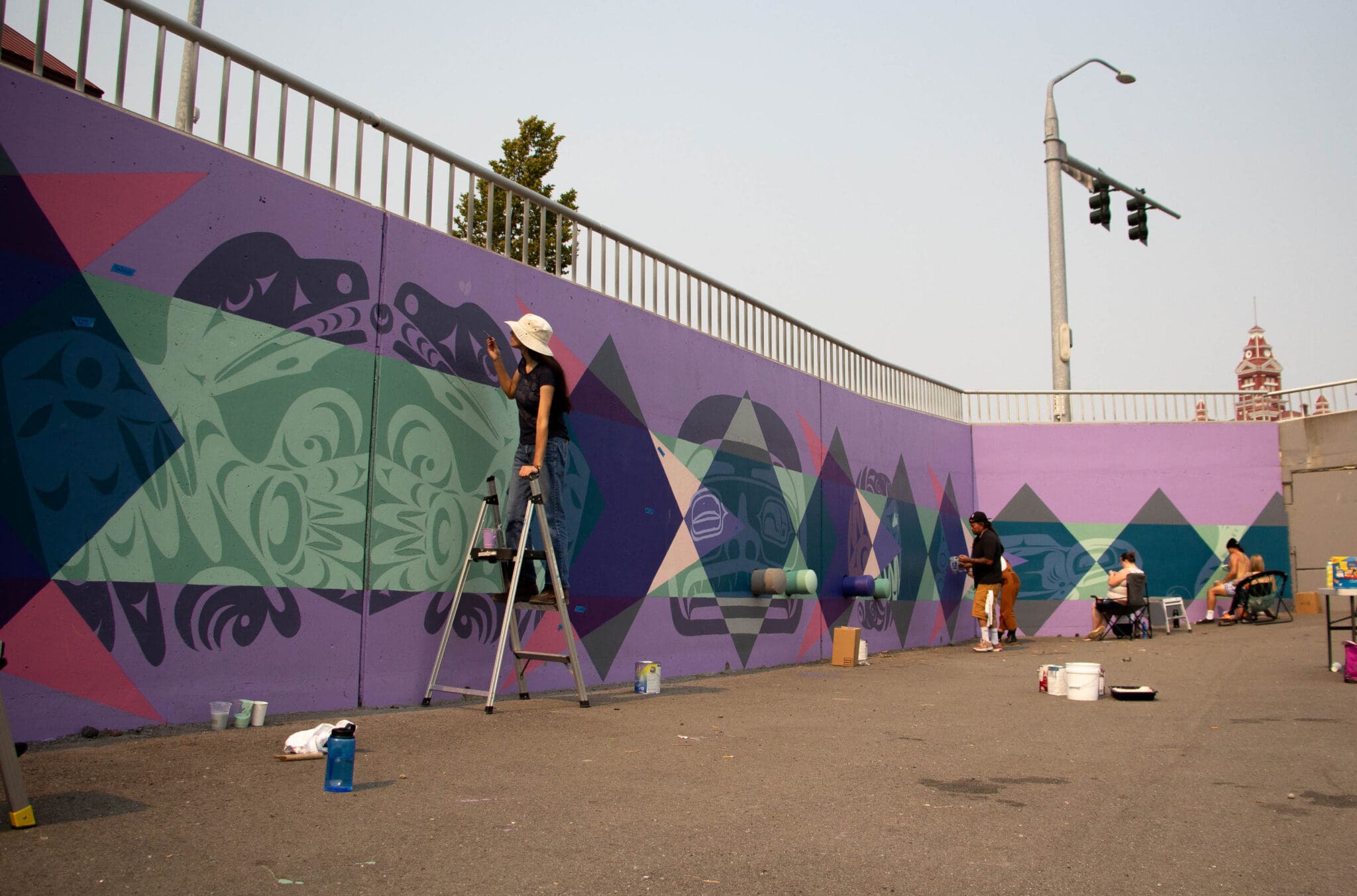
Created for the first Noisy Waters Mural Festival, this 150-foot work brought together 10 Indigenous artists representing tribal nations across North America. The festival transformed the Bellingham waterfront into a living conversation between Indigenous artistic traditions.
Free's contribution to the collective work draws from a Lummi coyote story, placing traditional oral literature at the scale of the street.
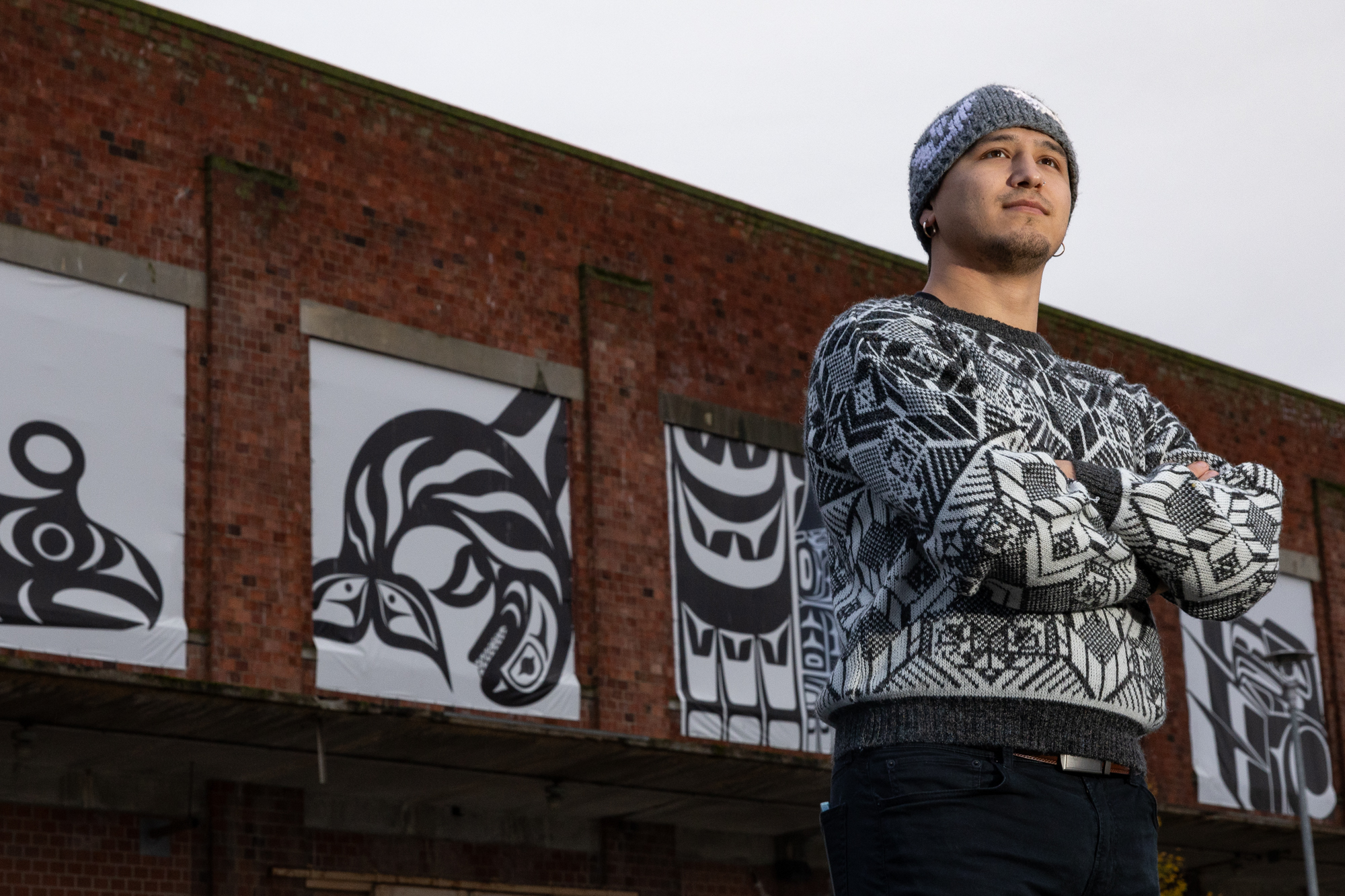
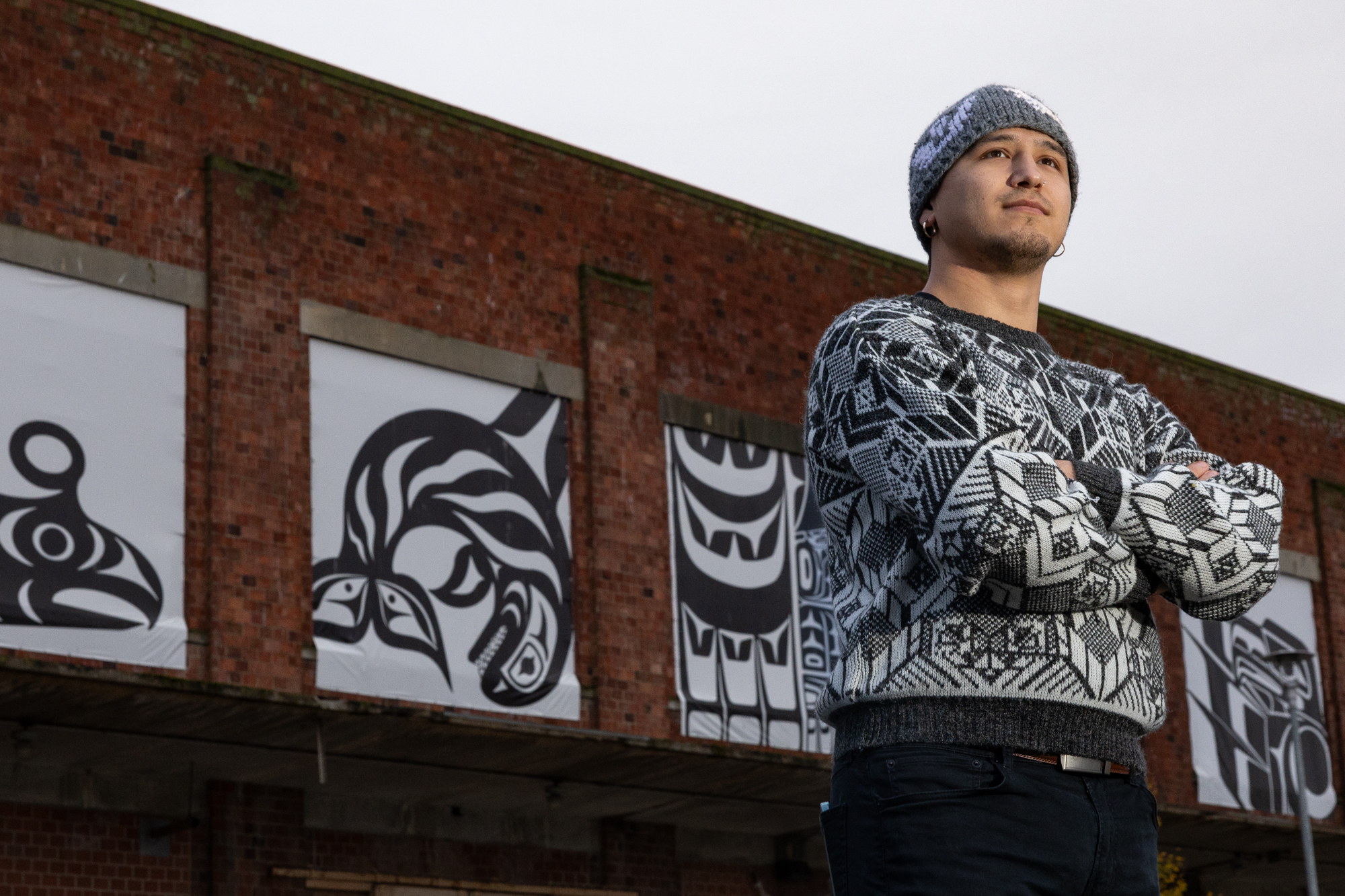
Grounded in the Salish Sea and the traditions of the Lummi Nation, Free Borsey paints murals that return culture to the places it was always meant to be seen. His work is made with community, not for it. Tsx'vilum Free Borsey
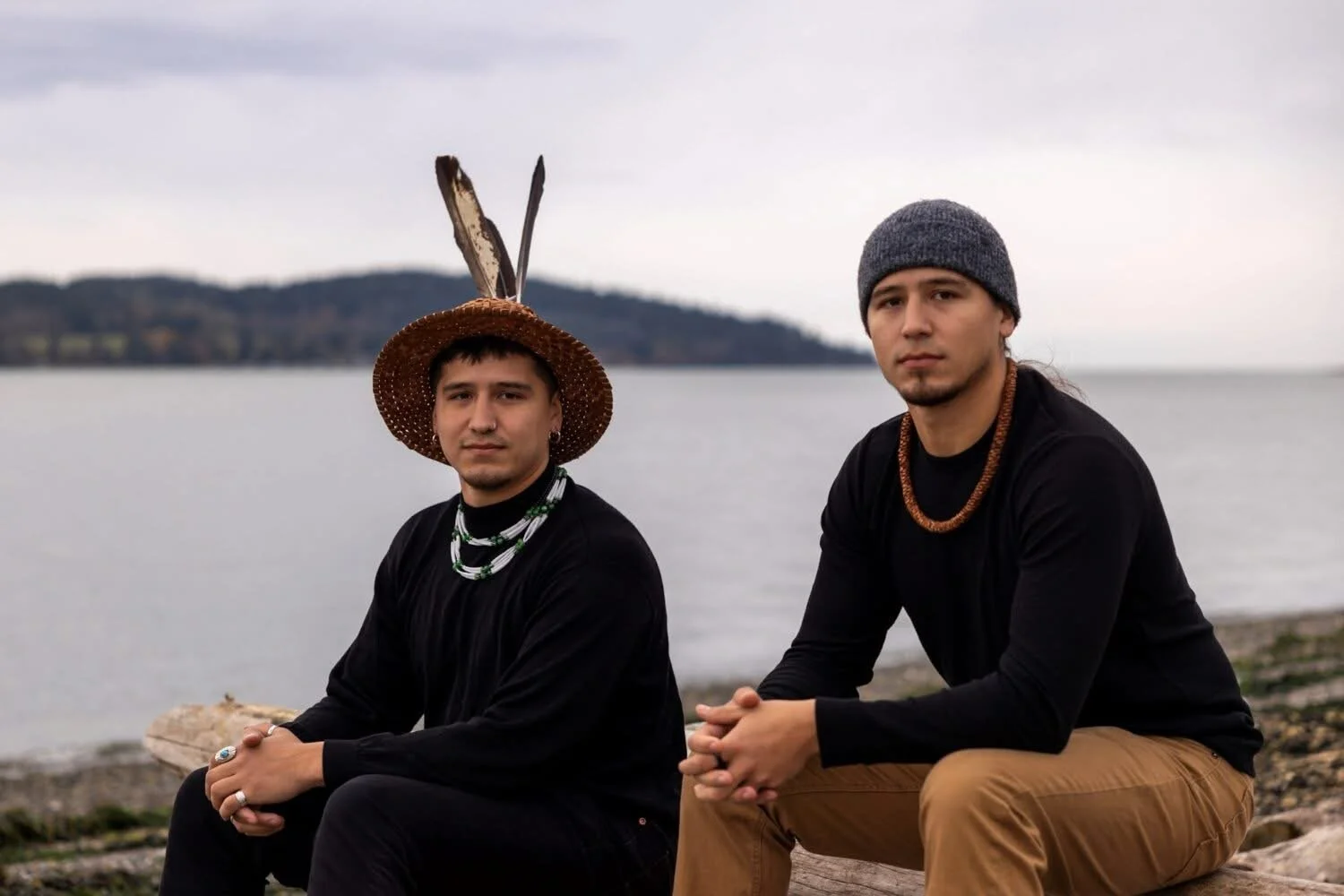
Free Borsey (Tsx'vilum) with his twin brother Raven (Xwesultun), Lummi Nation
Tsx'vilum Free Borsey is a Lummi Nation artist, muralist, and environmental steward whose work lives at the intersection of land, culture, and community. Based in Bellingham, he creates large-scale public art rooted in Coast Salish tradition, making Indigenous stories visible at the scale they deserve. His practice spans murals, cultural education, and youth leadership.
Free Borsey grew up on the Lummi Reservation, raised by his uncle and aunt with deep roots in the land and water of the Salish Sea. His childhood was spent fishing, hunting, running in the woods above West Shore, and playing in the tides on the mudflats. That immersion shaped everything that followed.
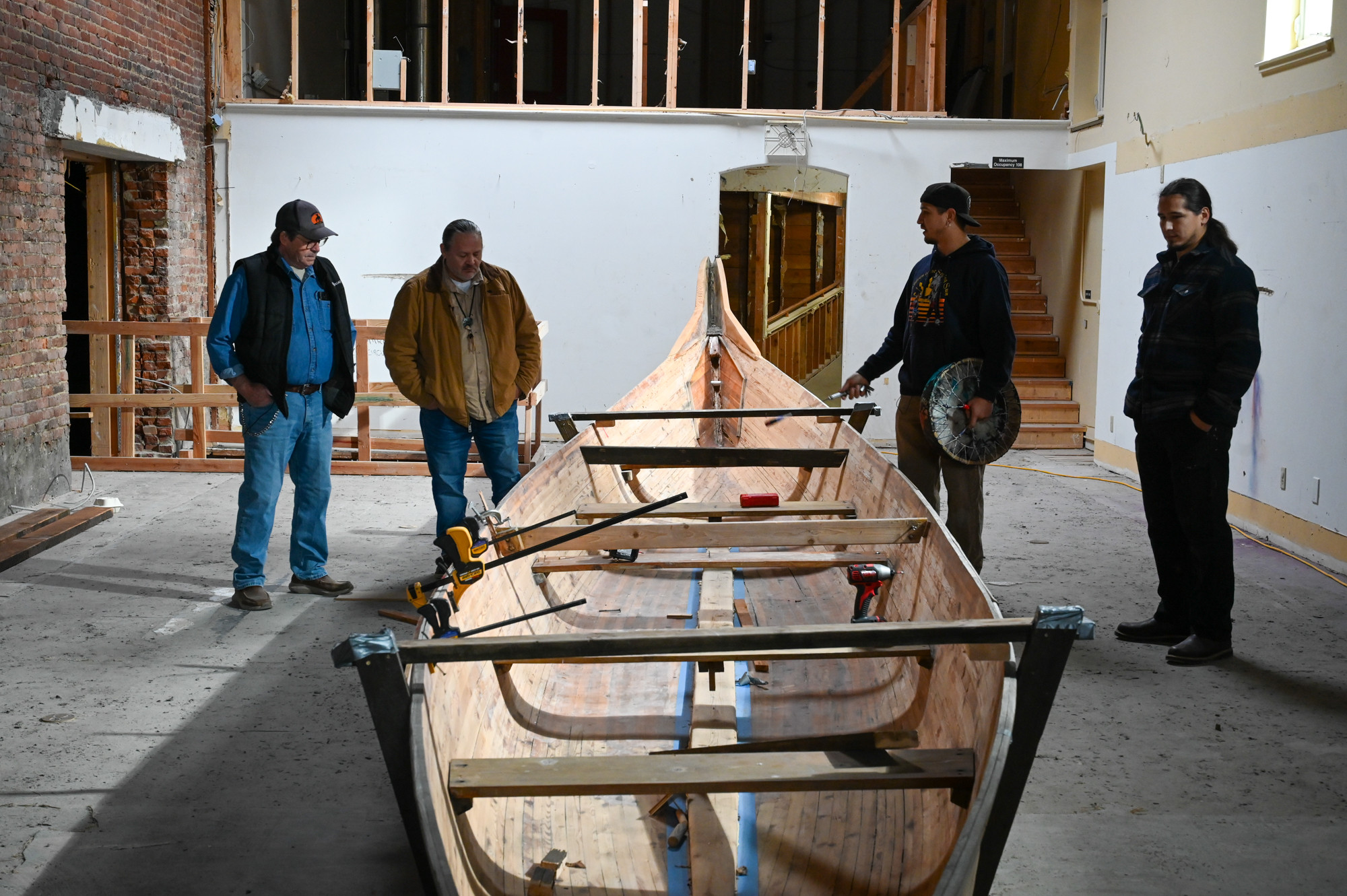
As a teenager, Free joined a 38-day, approximately 650-mile canoe journey that would become a turning point in his relationship to Lummi culture and tradition. The experience of paddling ancestral waters, of moving through the land at the pace the land requires, became the foundation of his practice as an artist and advocate.
After returning from Olympia at the end of COVID, he joined Children of the Setting Sun Productions, where he spent time traveling to interview elders and community leaders, documenting the knowledge and voices that hold the culture together. That work shifted him toward Native Environmental Science and toward art as a form of cultural preservation and activation, not documentation.
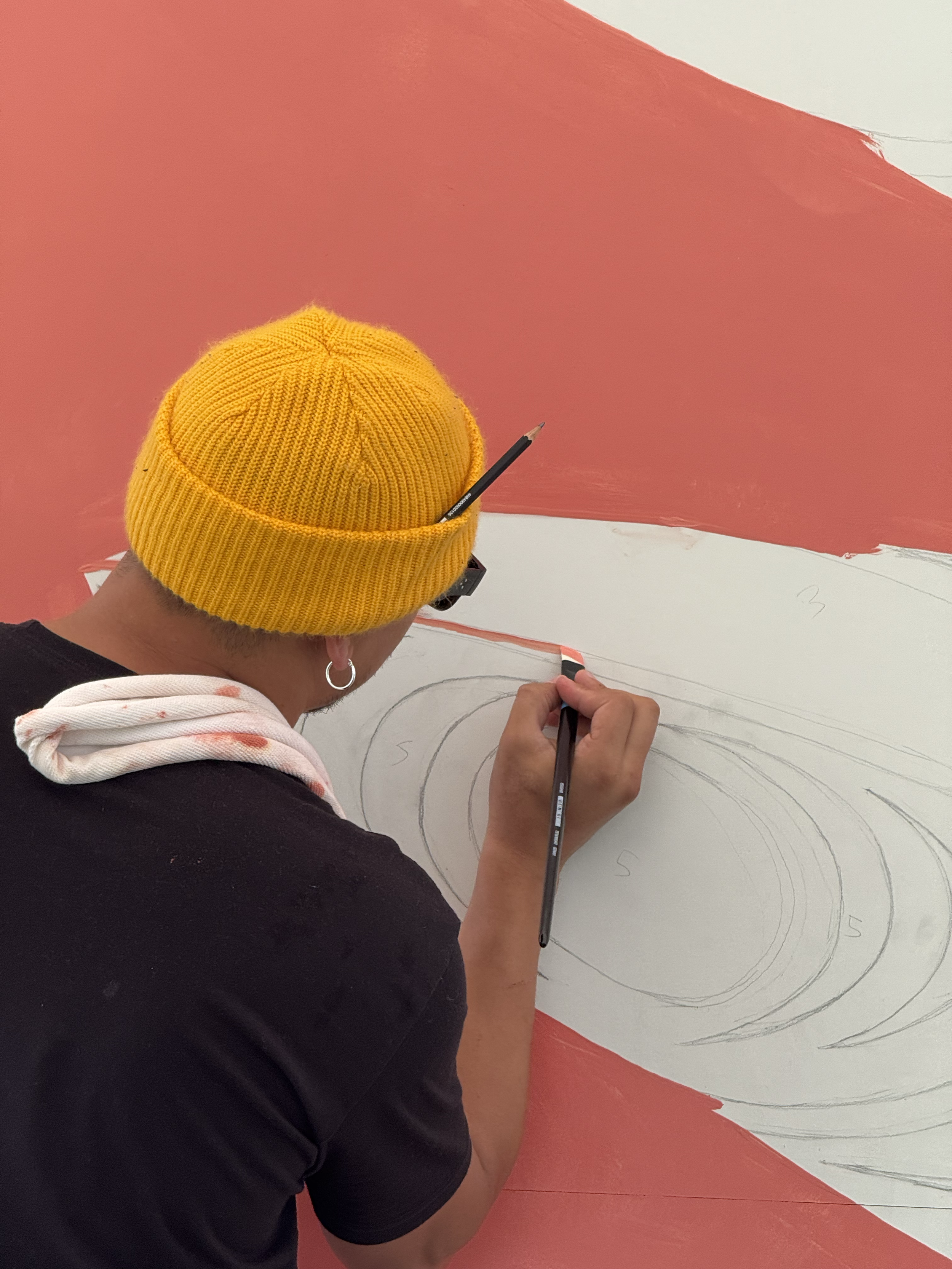
His visual practice blends Coast Salish formline with realism, grounding traditional imagery in the land and ecology that gave rise to it. He describes his art as "a map in a way. It should reflect the land, the people of that territory and what teachings these people received from the land." He brings that orientation to every mural: the wall is not a canvas. It is a piece of land that the story lives on.
80-foot walls to 150-foot festival pieces. Creative direction, team collaboration, and solo execution. Coast Salish formline blended with realism at the scale public space demands.
Traditional oral literature made visible: coyote stories, reef net knowledge, clam garden ecology, orca and eagle. Imagery rooted in the specific territory and teachings of the land.
Bridging science and spirit. Visual work that holds Indigenous ecological knowledge and makes the case for land stewardship through cultural presence rather than data alone.
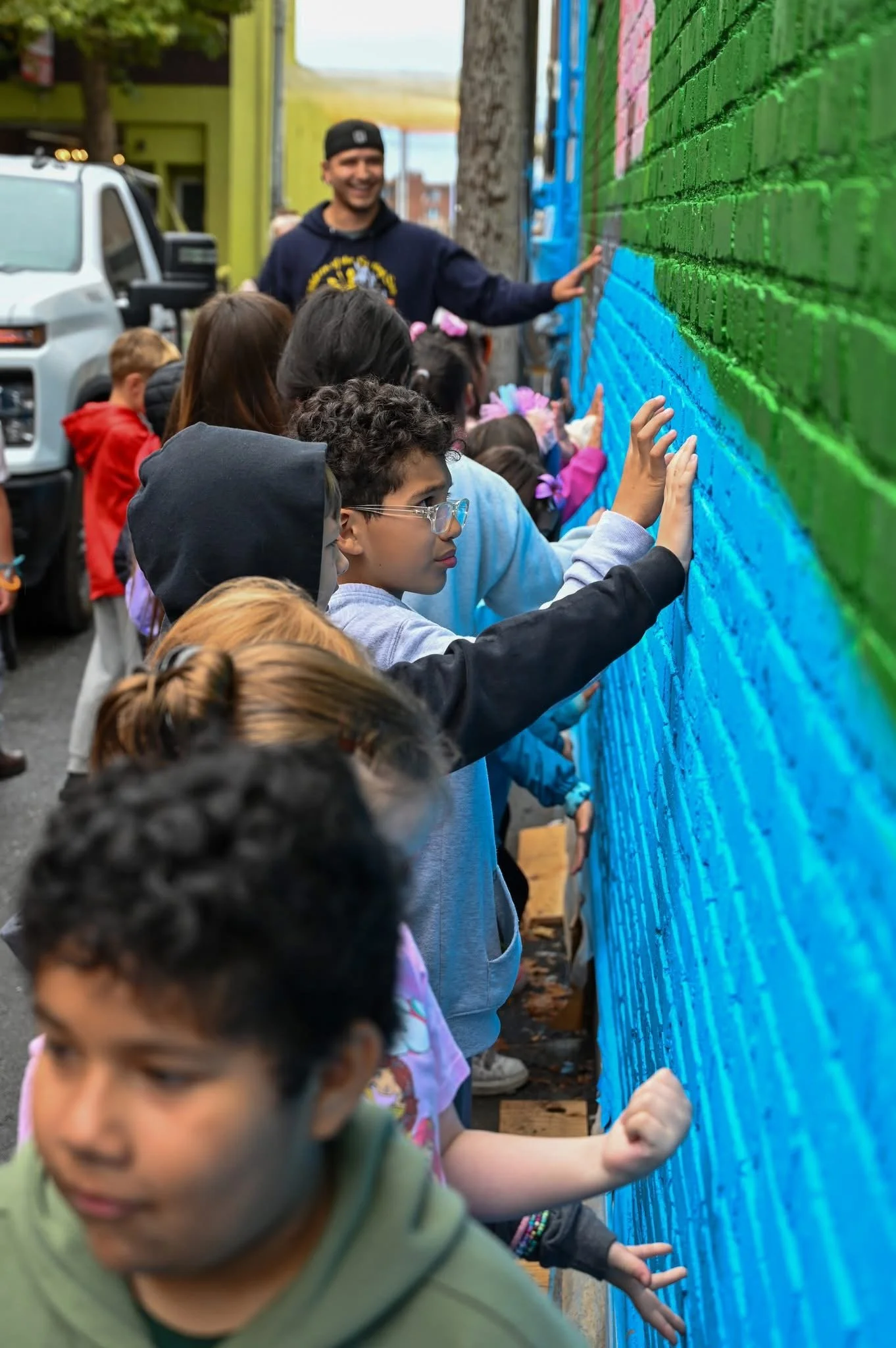
Live art activations, festival participation, youth mural co-creation. The community shapes the work. Free's practice treats the people in a place as collaborators, not audience.
Bringing young people into the mural process as participants. Cultural transmission through making: elder interviews, environmental education, hands-on art that passes knowledge forward.
Extending the mural beyond paint through nighttime projection mapping. Traditional stories animated across the surface of the wall, adding an interactive storytelling dimension to permanent public work.
Across all work
EnvironmentalSubject matter expert on environmental issues; advocacy, education filmmaking, and community documentation work focused on bridging Indigenous knowledge systems with environmental science.
Led design and execution of the 80-foot mural at 210 W. Holly St., including creative direction of the projection mapping layer and collaboration with Raven Borsey and Roy Nicol.
One of 10 Indigenous artists creating a 150-foot collaborative mural at the inaugural Noisy Waters Mural Festival, Bellingham waterfront, 2023.
Cultural accelerator supporting artists and creative communities; live art activations at Northwest Tune Up Festival and Downtown Sounds, 2024.
Represented the next generation of Indigenous environmental leadership at national conferences, speaking to the intersection of cultural revitalization and conservation.
Awarded by Washington Conservation Action to environmental leaders under 35 from underrepresented communities. Recognized for work at the intersection of environmental justice and cultural preservation. Funds directed toward reviving the Lummi Youth Canoe Family as a year-round cultural and conservation institution.
Featured in the Northwest Coast Hall, May 2022. Recognition of his cultural practice and contribution to the living traditions of the Coast Salish peoples.
Recognized for advocacy in support of the Climate Protection Act and Native voter mobilization, advancing Indigenous environmental priorities at the legislative level.
Humans are the little brother to all the plants and animals. Tsx'vilum Free Borsey
The Bullitt Prize is going toward something larger than any single mural. Free and his brother Raven are rebuilding the Lummi Youth Canoe Family, an institution that re-centers Tribal tradition and supports at-risk youth through year-round programming rooted in canoe culture and land stewardship. The 38-day, 650-mile canoe journey Free took as a teenager was his own turning point. This is the work of creating that turning point for others.
Through Children of the Setting Sun Productions, Free has spent years traveling to document elders, record oral histories, and create educational media that keeps knowledge alive and moving through the generations. The mural work extends this directly: young people are invited into the process, not brought in as observers. The act of making is the act of transmission.
The Coast Salish Living Mural is located near the original Lummi village site Xw'otqwem. That is not incidental. Placing Indigenous stories on the walls of the places where Indigenous people have always been is a form of cultural infrastructure, a way of making the land's history legible to everyone who passes through it.
Through Paper Whale and festival programming, Free builds cultural space for the communities his work serves. Live art activations, community gatherings, and cross-tribal collaborations like the Noisy Waters Mural Festival create ongoing points of contact between the work and the people it is made for and with.
From 80-foot commission murals to 150-foot festival works. Scale is a feature of the practice, not a constraint.
Exterior and interior paint. Nighttime projection mapping layers. Mixed media installations. Each project uses what the story requires.
Experience leading creative direction across collaborative teams and executing independently. Comfortable at both scales.
Available for commissions beyond Bellingham and the Pacific Northwest.
Grounded in Coast Salish tradition, with experience collaborating across tribal nations as part of multi-artist projects.
Community engagement, youth programming, and cultural consultation are part of every project. The work is not delivered to a community. It is built with one.
Free Borsey is available for public art and mural commissions, RFP submissions, cultural consultation, and community-engaged projects. Use the form to begin a conversation about your project.